
Recently, I have seen a number of posts suggesting that eccentric reducers are mandatory for all pump suctions. This has never been the case, however this “blanket rule” position appears to be gaining traction without much reference back to first principles.
The intent of this article is not to dismiss the use of eccentric reducers, but to clarify when they are required, when they are beneficial, and when they are not required.
What problem are we trying to solve?
The purpose of reducer selection on pump suction is straightforward: To prevent the accumulation and ingestion of gas (air or vapour) into the pump.
Centrifugal pumps are generally intolerant of gas. Even relatively small quantities may result in:
• unstable operation
• vibration
• loss of performance
• increased risk of cavitation
Reducer geometry only becomes relevant where there is a credible mechanism for gas to separate and accumulate within the suction line.
The origin of the “flat top eccentric” rule
On a horizontal suction line, a concentric reducer creates a localised dip at the crown of the pipe. If free gas is present, it can accumulate at this location and form a pocket. When that pocket is intermittently drawn into the pump, the result is erratic operation.
An eccentric reducer installed with the flat side on top removes this potential pocket by maintaining a continuous crown along the pipe.
This is good practice where gas may be present and in many projects, the marginal cost of adopting eccentric reducers throughout is negligible, and this alone often justifies their selection as a conservative default.
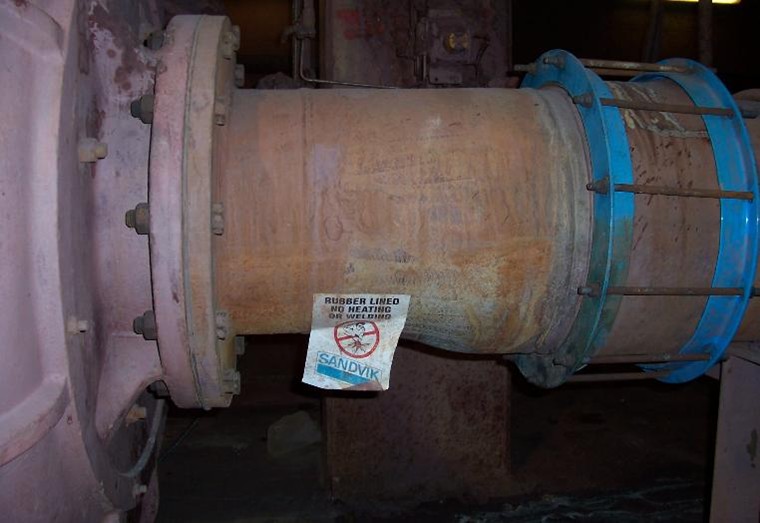
Fig. 1 Eccentric reducer – flat side up
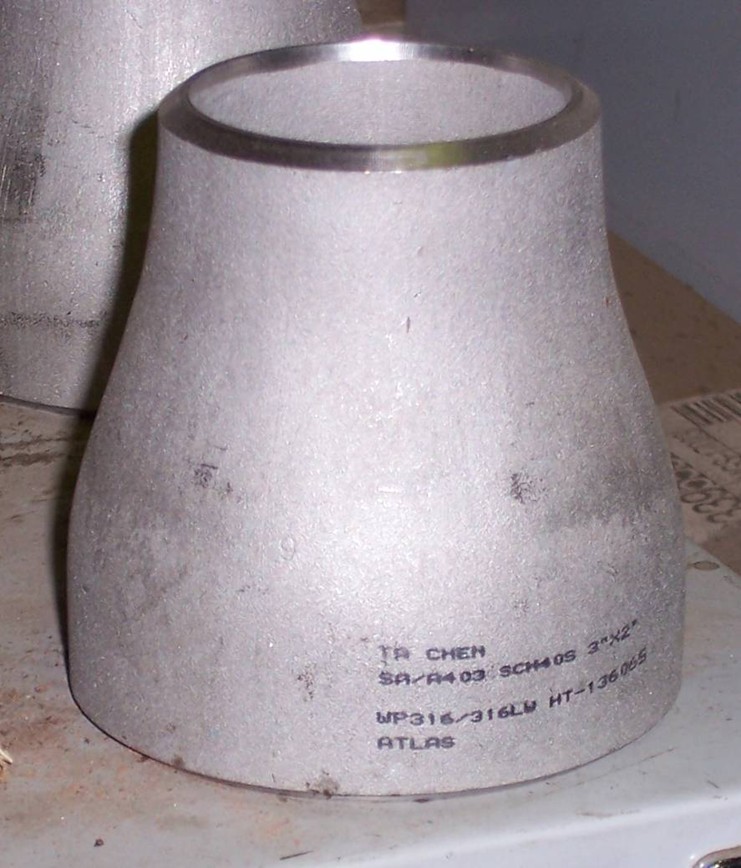
Fig. 2 Concentric reducer
Flooded suction systems: applying first principles
In a true flooded suction arrangement:
• the source vessel is above the pump
• the suction line remains completely full
• there is no credible path for air ingress
• adequate submergence prevents vortex formation
Under these conditions, the system behaves as a single-phase liquid flow. In the absence of a free gas phase, there is no mechanism for sustained air accumulation within the suction piping.
Water contains dissolved air under normal conditions, however this does not behave as a free gas phase and does not form pockets unless pressure conditions cause it to come out of solution.
Accordingly:
In a properly designed flooded suction system handling clean liquid, a concentric reducer does not inherently create an air pocket and is often acceptable in practice.
Many such installations operate reliably with concentric reducers on the suction side.
Where eccentric reducers are essential
Suction lift arrangements
Where the pump is above the liquid level, air is inherently present and the suction line is not naturally flooded.
Systems with entrained air or froth
In slurry systems, particularly those associated with flotation or return water, the fluid may contain a significant volume of entrained air.
Even under flooded conditions, these systems behave as two-phase flow.
In these cases:
• gas separation can occur within changes in geometry
• air pockets can form even in nominally “full” pipelines
Eccentric reducers are generally required, however orientation becomes a matter of design intent.
A critical nuance: frothy slurries and flat side down orientation
In frothy slurry systems with oversized suction piping, a different approach may be appropriate. Where:
• the suction line is oversized (low velocity)
• significant air is present
• the source vessel (tank or hopper) is immediately upstream
An eccentric reducer installed with the flat side down can, in some cases, deliberately promote the disengagement of air back toward the source vessel. It provides a final opportunity for separated air to migrate back toward the source vessel rather than being carried into the pump.
This is not a universal rule, but a deliberate design choice based on:
• expected gas fraction
• flow velocity
• proximity to the source vessel
It also highlights an important point:
Reducer orientation in slurry systems can involve competing objectives between gas management and solids handling.
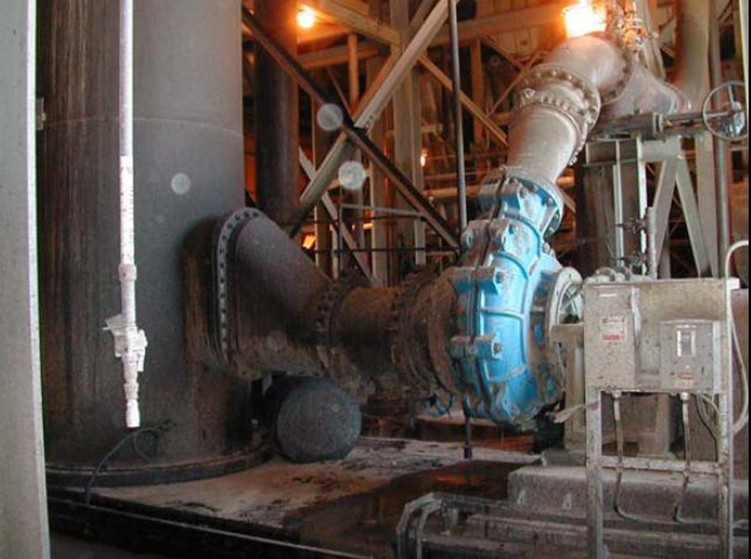
Fig. 3 Over-sized eccentric reducer – flat side down for a frothing slurry
Note: Orientation selected to allow gas disengagement back to source under low velocity conditions
(Source: Weir Minerals)
What do standards say?
Guidance from organisations such as the Hydraulic Institute and the American Petroleum Institute commonly illustrate eccentric reducers on horizontal suction lines and emphasise the avoidance of air pockets.
However:
These are recommendations based on good practice, not universal mandates. No widely adopted standard requires eccentric reducers on all pump suctions irrespective of service conditions.
Why the blanket rule persists
The widespread adoption of eccentric reducers is readily understood. It is:
• conservative
• low cost
• effective in preventing common issues
• easy to specify without detailed analysis
However, it can also:
• lead to over-specification
• conflict with other design objectives (particularly in slurry systems)
• discourage proper engineering assessment
A more appropriate design approach
Reducer selection should be based on whether gas can accumulate in the suction line.
Use an eccentric reducer (typically flat side up) where:
• air ingress is possible
• the system is not fully flooded
• entrained gas or froth is present
• pipe geometry creates high points
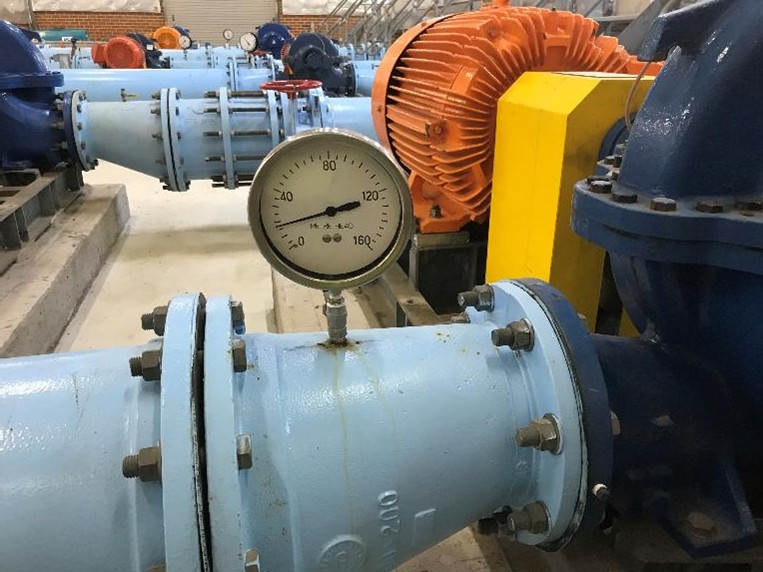
Fig. 4 Eccentric reducer – flat side up for an axial split casing water pump
Consider flat side down orientation where:
• frothy slurries are present
• suction piping is oversized
• there is an opportunity for gas to disengage back to the source
A concentric reducer is acceptable where:
• suction is truly flooded
• the fluid is single-phase liquid
• air ingress is not credible
• the suction line is well graded and free of high points
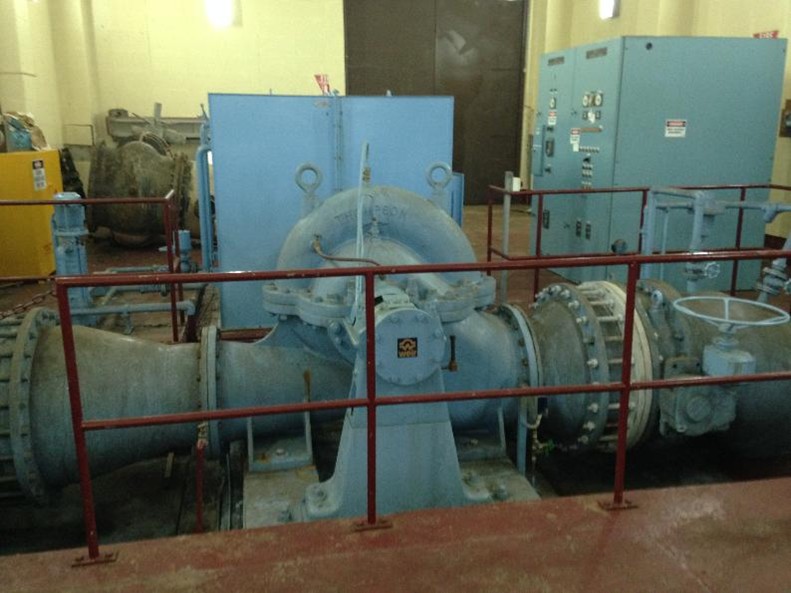
Fig.5 Concentric reducers either side of an axial split casing pump
Design philosophy and risk management
It is important to be clear about intent. This article is not advocating the use of concentric reducers in preference to eccentric reducers on pump suction. In many applications, the use of eccentric reducers throughout is a conservative and entirely appropriate design approach. It is simple, low cost, and effective in mitigating the risk of air accumulation, particularly where operating conditions, installation quality, or future modifications are uncertain. However:
Conservative design should not be confused with a universal technical requirement.
The purpose of this discussion is to reinforce that reducer selection should be based on first principles and an understanding of whether gas accumulation is a credible failure mode. Where uncertainty exists, or where risk tolerance is low:
The use of eccentric reducers on pump suction remains good practice.
Closing comment
The use of eccentric reducers on pump suction is often good practice, but it is not a universal requirement.
The correct question is not “What reducer should be used?” but “Is there a credible mechanism for gas to accumulate in this system?”
Answer that question based on first principles, and the correct design choice will follow.
Practical note: In many projects, the cost difference between concentric and eccentric reducers is negligible. Where uncertainty exists, specifying eccentric reducers throughout remains a simple and robust design choice.